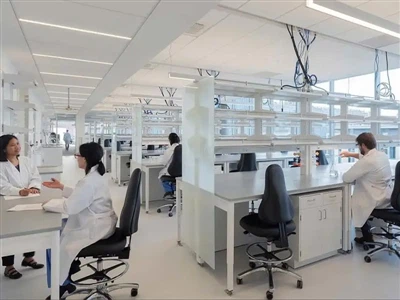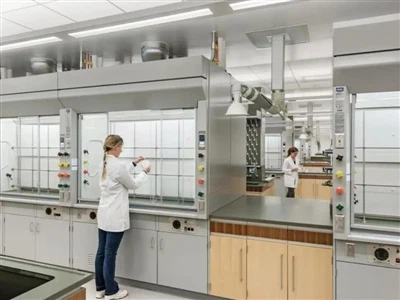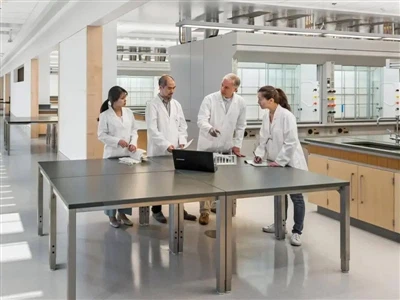


Laboratories have become essential institutions for scientific discovery, research, and innovation across various fields, including chemistry, biology, medicine, and physics. The development of laboratories reflects the broader evolution of science and technology over centuries, showcasing advancements in knowledge, techniques, and equipment. This article explores the rich historical background of laboratories, highlighting key milestones and transformations.
Early Beginnings: Alchemy and the Renaissance (500 BC - 1600 AD)
Ancient Practices
The origins of the laboratory can be traced back to ancient civilizations, where early scientists practiced rudimentary forms of experimentation. Alchemy, prevalent in ancient Egypt, Greece, and China, laid the groundwork for laboratory practices, even though it
HAMECC (Shanghai) Lab Solutions Co.,Ltd
ADD:RM511, Dobe Hongqiao International, No.199 Fenghong Road,Minhang District, Shanghai
HAMECC (Shanghai) Lab Solutions Co.,Ltd
ADD:RM511, Dobe Hongqiao International, No.199 Fenghong Road,Minhang District, Shanghai was more mystical than scientific. Alchemists sought to transform base metals into gold and discover the "philosopher's stone," blending observation and experimentation in rudimentary facilities.
Renaissance Innovations
The Renaissance (14th - 17th centuries) marked a pivotal period in the history of science. The revival of learning and inquiry led to the establishment of the first formal laboratories. Figures like Galileo Galilei and Paracelsus contributed to a more systematic approach to experimentation. Notably, Paracelsus introduced the idea of performing experiments in a controlled environment, laying the foundation for modern laboratory practices.
The Birth of Modern Science: 17th - 19th Century
The Scientific Revolution
The 17th century ushered in the Scientific Revolution, during which notable scientists such as Robert Boyle and Isaac Newton emphasized empirical observation and experimentation. Boyle's work on gases, articulated in his publication The Sceptical Chymist (1661), showcased the importance of laboratory experiments, and he is often regarded as the first modern chemist. The establishment of the Royal Society in 1660 also marked the institutionalization of scientific inquiry, paving the way for future research facilities.
Development of Chemical Laboratories
The 18th and 19th centuries witnessed significant advancements in chemistry, leading to the establishment of dedicated chemical laboratories. The invention of new apparatus, such as the distillation unit and the balance, allowed for more precise experiments. The work of chemists like Antoine Lavoisier, who is often referred to as the "father of modern chemistry," further advanced laboratory techniques and transformed chemical education.
The 20th Century: Specialization and Technological Advancement
Expansion of Laboratory Types
The 20th century saw the rise of specialized laboratories, including those focused on microbiology, genetics, and physics. The invention of the microscope and advancements in spectroscopy revolutionized biological and chemical research. Notably, the establishment of research universities and institutions, such as the Max Planck Society and the National Institutes of Health, contributed to robust research environments where interdisciplinary collaboration flourished.
HAMECC (Shanghai) Lab Solutions Co.,Ltd
ADD:RM511, Dobe Hongqiao International, No.199 Fenghong Road,Minhang District, Shanghai
HAMECC (Shanghai) Lab Solutions Co.,Ltd
ADD:RM511, Dobe Hongqiao International, No.199 Fenghong Road,Minhang District, Shanghai
Innovations in Laboratory Equipment
Technological advancements profoundly impacted laboratory work. The development of automated equipment, computer systems, and sophisticated analytical tools enhanced researchers' capabilities. Instruments like the electron microscope and PCR (Polymerase Chain Reaction) dramatically expanded the scope of scientific inquiry.
Current Trends: Precision and Sustainability
Integration of Technology
Today, laboratories continue to evolve, driven by advances in technology. The increasing integration of artificial intelligence, machine learning, and big data in research allows for more complex experiments and data analysis. Automation has led to higher throughput in experiments, enabling large-scale studies.
Emphasis on Sustainability
Modern laboratories are also focusing on sustainable practices, reducing waste and energy consumption. Green chemistry principles are becoming central to laboratory design and operation, reflecting a growing awareness of environmental issues within the scientific community.
The evolution of laboratories from ancient alchemical practices to advanced research centers is a testament to humanity's relentless pursuit of knowledge. Laboratories have transformed into key environments where innovation thrives, playing a vital role in advancing scientific understanding and addressing global challenges.